“It’s probably just my opinion, what do I know.”
“I don’t want to sound like I’m attacking them.”
“They probably already know.”
I hear these most from first-time managers, and sometimes from experienced ones. The words change, but the feeling underneath doesn’t: I’ve seen something, I have something to say about it, and I’m afraid saying it will make things worse.
The fear is human. But if you act on it, you leave someone alone with a problem only you can see. Your observation is a gift they can’t open without you.
Silence protects you, not them
I’ve seen what that silence costs:
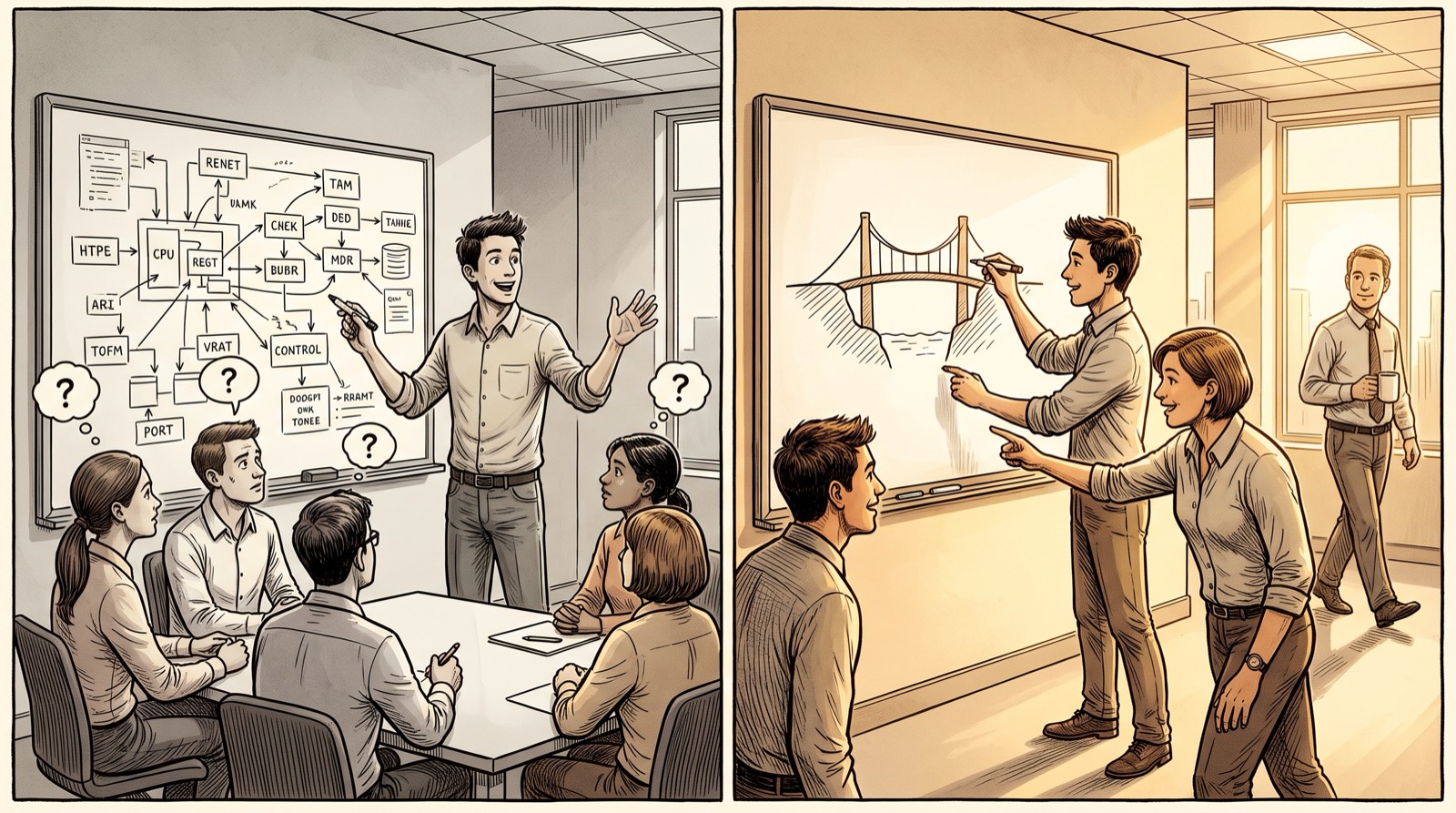
- Developers whose product colleagues didn’t dare admit they couldn’t follow the technical conversations. The developers never knew they weren’t understood, and their range for collaboration quietly shrank.
- Testers who poured their time into menial tasks. Nobody told them: “this isn’t business value.”
- Leaders who meant to come across as assertive and decisive. Nobody told them they came across as angry and confrontational.
In every case, other people noticed. They adjusted around the person instead of talking to them. The person saw the consequences, but never the cause. And in the first example, the people staying quiet weren’t managers. They were peers.
Staying quiet doesn’t spare them any of that. It spares you an uncomfortable conversation. That’s convenience dressed up as kindness.
You can’t hold people accountable for what you never said
With the developers, I was the one who finally said it. First they were surprised: why had nobody told them? Then defensive. Then they accepted it and acted on it: they asked for more feedback, and used more visuals and metaphors. It took time to sink in. One more reason to say it early.
Some never got there. Not being able to act on the feedback was the signal that this wasn’t the right team for them, and we parted ways.
So feedback isn’t a nice-to-have. Waiting for people to “just get it” is magical thinking. Everyone relies on their team to close their blind spots.
It also shows you who you’re working with. Good teammates act on it and improve, and that deserves recognition. Others reject it, or can’t grow into what the job demands. You only find out after you’ve said it.
The three excuses
“It’s just my opinion.” Yes, and that’s what makes it useful. They can’t see themselves from where you’re standing. You’re not delivering a verdict; you’re reporting what you saw. They decide what to do with it.
“I don’t want to attack them.” Then don’t. An attack is about who someone is. Feedback is about something they did. More on that below.
“They probably already know.” The developers above didn’t. And if they do, you’ve lost five minutes. Staying quiet costs more every month.
Ruinous Empathy is the real trap
Kim Scott’s Radical Candor (website) gives this a name. Her framework has two axes: care personally and challenge directly.
People who hesitate are afraid of landing in Obnoxious Aggression: challenging without caring. That’s the “attack” they picture.
But the first-time managers I coach rarely end up there. They land in Ruinous Empathy: they care so much about not hurting feelings that they watch someone walk off a cliff. The person keeps making the same mistake, month after month, while their reputation erodes. Nobody was mean to them. Nobody helped them either.
The way out isn’t to care less. It’s to add the challenge.
How to say it without attacking
Check your motive first. Are you saying this to help them, or to vent? If it’s to vent, wait until it isn’t.
Be specific about the work, not the person. “You’re bad at presentations” is an attack. “Yesterday you spent ten minutes on context before your recommendation, and I think people tuned out before the important part” is something they can act on. Name the moment, the behavior and the effect.
Say why, then ask. “I’m telling you this because I think you’re close to being really effective in those rooms.” Then: “Is that something you’ve noticed?” The question turns a verdict into a conversation.
The test
When I hesitate, I ask myself one question: if I were making this mistake, would I want someone to tell me?
I always would. I’d rather hear it now from someone who cares than find out in a performance review six months later. Or never find out, and just wonder why the opportunities stopped coming.
It works both ways. When someone tells me something good about a colleague, I ask a different question: “Nice! And… did you tell them?” Positive feedback is a gift too. It tells people what to keep doing.
So if you noticed it, say it. Specifically, with care, while it can still help.
That’s not attacking. That’s leading.
I’ve also written about building credibility so your feedback lands.